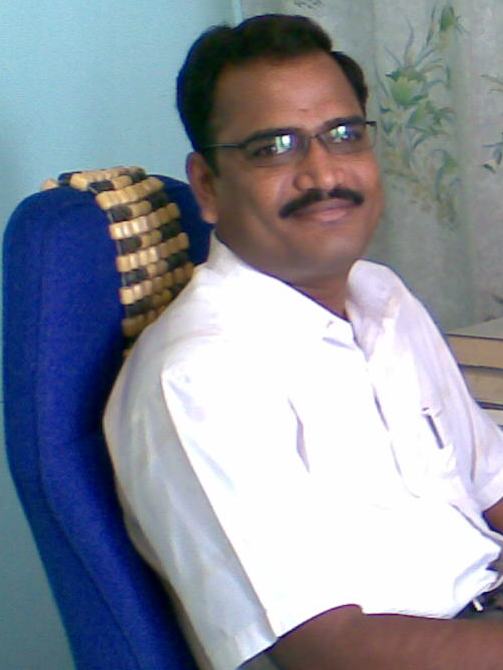
Dr.D.Senthil Kumar

Dr.D.Senthil Kumar
Psychologist & Psychotheraphist

Please visit Vivekanantha Homoeo clinic & Psychological counselling Center Official web site


http://homeoall.com/


Vivekanantha Psychological Counseling Center & Homoeo clinic


We offer

PSYCHOLOGICAL GUIDANCE and COUNSELING

1-Family Guidance and Counselling

2-Carrier Guidance and Counselling

3-Sex Guidance and Counselling

4-Educational Guidance and Counselling

5-Adolesent Guidance and Counselling

6-Pre and post marital Guidance and Counselling

7-Stress Guidance and Counselling

8-Anxiety Guidance and Counselling

9-Depression relieving techniques

10-Personality development programs


PSYCHOLOGICAL TESTING

1-Measuring stress

2-Measuring job satisfaction and involvement

3- Measuring organizational climate

4-Memory tests

5-Creativity test

6-Marital satisfaction test

7-Measuring anxiety

8-Attitude test

9-Assertiveness test

10-Self esteem test


SEXUAL PROBLEMS:

Ø HUSBAND/WIFE IS NOT HAVING DESIRE TO HAVE SEX,

Ø DRINKS ALCHOHOL,

Ø ADDICTED TO SMOKE,GANJA,

Ø MENTALLY SICK,

Ø DEPRESSION.

Ø HUSBAND HAVING AFFAIR WITH ANOTHER LADY,

Ø UNNESSARILY SUSPECTING WIFE.

Ø PENIS IS SMALL IN SIZE AND REFUSES FOR TREATMENT,

Ø EJACULATE SPERM IN VERY SHORT PERIOD.

Ø PAIN DURING INTERCOURSE,

Ø WHITE DISCHARGE (Leucorrhoea),

Ø ITCHING IN THE GENITAL REGION,

Ø FEMALE MASTURBATORY PRACTICE

Ø MALE MASTURBATORY PRACTICE,

Ø PREMATURE EJACULATION

Ø GETTING DISCHARGED EVEN BEFORE HAVING SEX,

Ø POOR ERECTION,

Ø PENIS NOT IN STRAIGHT,

Ø SWELLING OF TESTIS,

Ø TO GET RID OF FROM HOMOSEXUAL PRACTICES,

Ø EXCESSIVE SEXUAL DESIRE,

Ø UNABLE TO RETRACT SKIN OVER THE PENIS

Ø VERICOCELE


We are providing counselling and guidance for

» Penis-Length-Width/Curvature
» Masturbation
» Semen - Quantity/With Urine/Stool
» Night Discharge
» Sexual Interplay Interplay
» Oral Sex
» Organic/Psychological Impotence
» Male/Female Multiple Orgasm
» Sexual Positions
» Sex After 50
» Sex With Same Sexuality
» Use of Condom in Male & Female
» Family Planning
» Hormones/Sex Tonic
» Towards Healthy Sexuality
» Miscellaneous
» Complete Counselling of Proposed Couple


Children’s

v Adamant

v Learning Disability

v Do not obey the parents comment

v Violence

v Hyperactive child

v Sluggish child

v Adolescent Problems

v Teen age love and affection

v Infatuation

v Poor memory

v Lack of concentration in studies

v Sudden change of activities

v And more…


We conduct

Personality Assessment Test

For

MNC & Corporate Companies (Recruitments and Promotion)


For Direct Consultation Please visit


Chennai - Head Office

(Consultation by Appointment only)

Vivekanantha Homeo Clinic & Psychological Counseling Center

B-12, Second Floor, Paramount Park (Dr Plaza) - B Block,

Velachery Main Road,

Direct Opposite to Saravana Stores, Mega mart upstairs,

Near Vijaya nagar Bus Stand,Velachery, Chennai 42,


Panruti – Branch Office

Vivekanantha Homoeo clinic & Psychological Counseling Center

126,Chennai Salai

( Near Railway Gate, Lakshmi Villas Bank ATM Direct Opposite)

Panruti 607106

Cuddalore District

Tamilnadu


For Appointment

Please call: 09443054168, 09786901830


Pondicherry Camp

(Consultation by Appointment only)

Every Saturday:11.00am to 04.00pm


NB:-

Ø We are taking only minimum number of patients per day.

Ø We are allotting 40 to 5o minutes for new patients & 15 to 20 minutes for follow-ups.

Ø So be there at time to avoid unwanted waiting

Ø For Psychological consultation “we concentrate more to client’s privacy, so we are allotting 40 to 50 minutes/client – so be there at time


For Appointment

Please call: 09443054168, 09786901830


For Foreign patients

For more detail and mode of payment

Send mail to consult.ur.dr@gmail.com

Or

Call +91 9443054168, +91 9786901830


http://homeoall.com/

Professional secrecy will be maintained

(Your complaints and other Details should be kept very confidential)


--==--


Online or Telephonic Psycho Counselling and Psychotherapy

Rs 750/- (Seven hundred five rupees only)

(For one hour telephone Counselling or Direct Consultation-Counselling calculate according to the sittings)


Mode of Payment

1-Please pay Rs 750 in State Bank of India (SBI) any branch of INDIA in favour of Dr.D.Senthil Kumar A/C No: 10577754912 Payable at Panruti (IFS Code: SBIN0002251) Branch

Or

Please pay Rs 750 in ICICI bank any branch in INDIA in favour of Dr.D.Senthil Kumar A/C No: 101401501103 Payable at Panruti (IFS Code: ICIC0001014) Branch (Through core banking or net banking)

Or

For abroad patients (please mail us to know the Fees + medicine charges + shipment charges) Pay through Western Union Money Transfer in favour of Dr.D.Senthil Kumar,

Note: Don’t forgot to mention your own Name, Age and Place (e.g. Kumar 29 Mumbai) in Remark section while making net banking, online payments


2-Please sent the payment details (Name, Age, Place, Date, Time & mode of Payment) through SMS to +919443054168, +919786901830 or Mail to consult.ur.dr@gmail.com


3-You will receive the Questionnaire for patients through mail within one or two working days. Then you need to fill and send back to us with previous reports & prescriptions (if you have). We will go through your case history. If we have any further more quires we will ask you through mail. Otherwise we will book you the medicines


4-You will receive the Medicines along with using details within 7 working days (in India), for abroad patients days may increase.


http://homeoall.com/

Professional secrecy will be maintained

(Your complaints and other Details should be kept very confidential)


Dr.D.Senthil Kumar’s

PROJECTS

1-Psychological and Homoeopathic Management of Essential Hypertension (For M.Sc -Psychology, Madras University, Chennai at the year of 2000-2002)

2-A Psychological study on Stress and anxiety among Hypertensive patients (For M.Phil- Psychology, TNO University, Chennai at the year of 2008)


ARTICLES

1-A case of Hepatitis (Homoeo times (A International journal on Clinical Evidence) Vol 2 Issue 7 July 2005)

2-A case of Furranculosis (Homoeo times (A International journal on Clinical Evidence) Vol 3 Issue 6 June 2006)

3-A case of Alopecia areata (Homoeo times (A International journal on Clinical Evidence) Vol 4 Issue 7 July 2007)

4-A case of ADHD (Homoeo times (A International journal on Clinical Evidence) Vol 5 Issue 2 Feb 2008)

5-A case of Atopic Dermatitis (Homoeo times (A International journal on Clinical Evidence) Vol 5 Issue 7 July 2008)

6-Childrens Milk Allergy (Homoeopathy Sudar (Tamil) May 2003)

7-http://similiacare.com/2008/10/15/irritable-bowel-syndrome-ibs-by-dr-senthil-kumar.html


Social Activities

1-Trained Yoga instructor by Vivekanantha Kendra, Kanyakumari at the year of 1999

2-Psychological counsellor for various school and college through Panruti Jaycees

3-Conducted many Homoeopathic Free medical camps and treated thousands of Patients

4-Past Secretary of Panruti Jaycees Club

5-Member of Panruti Rotary club

6-Past President of EXNORA INNOVATORS CLUB OF PANRUTI

7-President of Homoeo doctors study circle

8-Counsiller for Panruti Rotary Club Psychological counselling Center


Wednesday, May 11, 2011

Take Care of Your Child


1. Give your child security. A sense of belonging. Make him/her feel wanted by your cuddles and coos. Showing love and being loved gives a secure feeling and shows trust.
2. Keep harmony in the household. Arguments and angry talk build up fears. Harmony between parents overflows into security for children.

3. Fathers should get into the picture of family life.  Gifted children specially need his guidance and training besides   their mothers.

4. Let the child know that s/he is unique and you accept her/him permanently whether s/he has acted plausibly or naughtily. Avoid criticism, comparison with others and overprotection. Respect them as persons and they will respect you.
5. Don't push your baby.  Especially don't force him/her to eat, when you want him/her to. Don't insist or scold when toilet training is on.
6. Give your child significance and personal worth.   Love, but do not pamper. Pampered children make maladjusted adults who often end up as failures.  Love, but do not possess. S/he must be free to do what s/he ought, not what s/he likes.  Love is a motivation to be good.
7. Encourage the child to learn things for her/himself. Expect her/him to touch and taste.   Listen with ears and heart to what s/he has to say.

8. Do not let your child down.  Children live up to the reputation you give them.   Include her/him in any  family changes whether it is a new baby, a new house or a long vacation
.
9.
 Do not use shame as a punishment. Constant humiliation may upset his/her whole emotional balance as s/he grows older. Discipline lovingly. A child with unlimited freedom gets frightened. He suspects that s/he is not loved. Responsible parents are called to make some unpopular decisions. Discipline involves total molding of the child's character through encouraging good behavior and correcting unacceptable behavior. Be quick to praise sincerely, the performance and not the character of the child.


10. Let her/him have playmates her/his own age. Accept her/his friends. Children then tend to accept  the child who can participate and reject the one who cannot. Learning to participate has to start young.


Am Happy in A to Z

A-Accept 
Accept others for who they are and for the choices they've made even if you have difficulty understanding their beliefs, motives, or actions.

B-Break Away 

Break away from everything that stands in the way of what you hope to accomplish with your life.

C-Create 

Create a family of friends whom you can share your hopes, dreams, sorrows, and happiness with.

D-Decide
Decide that you'll be successful and happy come what may, and good things will find you. The roadblocks are only minor obstacles along the way. 

E-Explore

Explore and experiment. The world has much to offer, and you have much to give. And every time you try something new, you'll learn more about yourself.

F-Forgive

Forgive and forget. Grudges only pull you down and inspire unhappiness and grief. Soar above it, and remember that everyone makes mistakes.

G-Grow 
Leave the childhood monsters behind. They can no longer hurt you or stand in your way.

H-Hope Hope for the best and never forget that anything is possible as long as you remain dedicated to the task.

l-ignoreIgnore the negative voice inside your head. Focus instead on your goals and remember your accomplishments. Your past success is only a small inkling of what the future holds.

J-JourneyJourney to new worlds, new possibilities, by remaining open-minded. Try to learn something new every day, and you'll grow. Know that no matter how bad things seem, they'll always get better. The warmth of spring always follows the harshest winter.

L-Love Let love fill your heart instead of hate. When hate is in your heart, there's room for nothing else, but when love is in your heart, there's room for endless happiness.

M-Manage 
Manage your time and your expenses wisely, and you'll suffer less stress and worry. Then you'll be able to focus on the important things in life.

N-Notice 
Never ignore the poor, infirm, helpless, weak, or suffering. Offer your assistance when possible, and always your kindness and understanding.

O-Open 
Open your eyes and take in all the beauty around you. Even during the worst of times, there's still much to be thankful for.

P-Play 
Never forget to have fun along the way. Success means nothing without happiness.

Q-Question 
Ask many questions, because you're here to learn.

R-Relax 
Refuse to let worry and stress rule your life, and remember that things always have a way of working out in the end.

S-Share 
Share your talent, skills, knowledge, and time with others. Everything that you invest in others will return to you many times over.

T-Try

Even when your dreams seem impossible to reach, try anyway. You'll be amazed by what you can accomplish.

U-Use 
Use your gifts to your best ability. Talent that's wasted has no value. Talent that's used will bring unexpected rewards.

V-Value
Value the friends and family members who've supported and encouraged you, and be there for them as well.

W-Work
Work hard every day to be the best person you can be, but never feel guilty if you fall short of your goals. Every sunrise offers a second chance.

X-X-Ray

Look deep inside the hearts of those around you and you'll see the goodness and beauty within.

Y-Yield 

Yield to commitment. If you stay on track and remain dedicated, you'll find success at the end of the road.

Z-Zoom 
Zoom to a happy place when bad memories or sorrow rears its ugly head.


Stress out the Stress

  • First sit down to access the cause of stress. Take self help and help from others too if needed. Do it now. Keep emotions in check and then speak, think positively.  Positive thoughts lead to positive actions, positive habits and finally positive character. Negative thoughts should they rear up should be discarded immediately or at least by day end definitely.
  • Sleep over problems. Most vanish or are solved by morning, others seem less threatening.
  • Build a bank balance, starting from your very first salary. Save regularly, drops fill oceans. This will enable you to meet need not greed.
  • Compare self with others less fortunate never with the more fortunate.   Never compare children especially your own.
  • No one can insult you, anger or greed will make you feel inferior without your permission. Problems are signs of life so they are bound to be there till you are alive. The only people without problems are the ones in the grave.
  • Hear both sides of a story, evaluate and then act.
  • Help others by motivated service. Live each day doing small acts in a great way. This will yield pure joy and nurtural self esteem.  However, learn to say and accept a 'NO' as well.
  • Manage your time as you would with your money. Delegate work, but never forget it.
  • Switch off office work on leaving the office. Don't carry extra baggage. There are problems everywhere dont borrow them from office and take home.
  • Be honest at all times, especially when paying taxes.
  • Never spoil your children, but do give them a helping hand always. Discipline them from early age and be consistent. As they grow into young adults they will be perfectly disciplined and you can replace discipline with trust. You follow the same rules that you preach to your children, they learn better with examples.
  • Respect self and others and you will command respect.
  • Give of your best at all times.  Failures will be there but they are only stepping stones to success. A successful person arises after each fall but an unsuccessful one will remain down and blame his fall on someone else.
  • Sorry and thanks should be instantaneous.   Compliment whenever you can - it is a gift.
  • Make forgiveness an attitude. A forgiven person makes a loyal friend. You will be happy with a bad memory of an ill done to you by someone, but be assured; your health will get a boost
  • Sulking or brooding will lead to stress. However, visiting friends, relatives or a sick person, doing favors or getting involved in helping another are stress busters.
  • Don't distrust anyone, but don't trust blindly. First test for genuineness.
  • Help and empathies with the less fortunate. Keep busy to prevent an empty head from filling up with stress.
  • Set goals to conquer stress with time limits. However, keep in mind the needs involved and be realistic.
  • Expect and accept a level of dust in life.  No one can dust like you, neither can you dust like someone else, but it helps to be specific in dishing out duties.
  • Don't clutter the mind with too many things; you will make a mess. Do one thing at a time, starting with the easiest You will finish a lot quickly and thus will give a boost to your morale.
  • Laugh a lot, this kills stress.
  • Use books as weapons for everyday battles. They broaden our mental horizon and stimulate our minds, thus getting rid of stress.
  • Never be revengeful to get even. Angry words are like poison arrows which kill. Once they leave the quiver and are shot, they never return.
  • Is criticism bogging you down?   Don't let it.   Put it under your election microscope and you will discover some truth there. A deadly bug which must be eliminated in order that you can grow.
  • Intersperse your day with regular one minute spontaneous prayers. These will be delete buttons for your stress and a life line to your Creator Who knows and cares for you even more than yourself.
  • Love what you do for a living and you will find happiness for a lifetime. If all fails, please lower your high standards to something closer to this earth.


Stress


Stress affects virtually everyone at some time in their life. As well as the emotional and psychological disruption it causes, stress-related medical problems are becoming increasingly common. In the modern world, we all need to learn how to cope with stress. 

What is stress?
 
The body has an inbuilt physical response to stressful situations. Faced with pressure, challenge or danger, we need to react quickly, and our bodies release hormones such as cortisol and adrenaline to help us do this. These hormones are part of the "fight or flight" response and affect the metabolic rate, heart rate and blood pressure, resulting in a heightened - or stressed - state that prepares the body for optimum performance in dealing with a stressful situation. 
Very often, modern stresses do not call for either fight or flight. Nevertheless, the same stressing hormones are released as part of the reaction and this natural reaction to challenge or danger, instead of helping, can damage health and reduce the ability to cope. 

What causes stress?
 
Many things (or the anticipation of them) can lead to stress: 

1.  pressure to perform at work, at school or in sports 
2.  threats of physical violence 
3·  money worries 
4·  arguments 
5·  family conflicts 
6·  divorce 
7·  bereavement 
8·  unemployment 
9·  moving house 
10· Alcohol or drug abuse. 

Sometimes, there is no particular reason for developing stress, or it arises out of a series of minor irritations. 

Who gets stressed?
 
The list above shows that everyone is at risk of being stressed, since it can be caused by a range of commonplace situations. However, people have very different mental responses to the body's natural reaction to a stressful situation. For some it can be an essential stimulus, helping motivate them to achieve more. In others it causes an adverse reaction, causing a sense of not being able to cope and demotivation. 
It is important to differentiate between temporary stress that you know will go away when a situation is resolved, and long-term or chronic stress. Most people can cope with short periods of stress, and it can often be relieved by relaxing, taking a walk, chatting through issues with friends, or having a good night's sleep. Chronic (long-term, continuous) stress is much harder to deal with, and can be psychologically and emotionally damaging, both for an individual and for friends and family. 

The symptoms of stress
 

Everyone reacts to stress differently, but there are some common effects that help us recognise it. In times of extreme stress, people may shake uncontrollably, hyperventilate (breathe faster and deeper than normal) or even vomit. For people with asthma, stress can trigger an attack. People who are chronically stressed are also susceptible to any of the following: 

1·  periods of irritability or anger 
2·  apathy or depression 
3·  constant anxiety 
4·  irrational behavior 
5·  loss of appetite 
6·  comfort eating 
7·  lack of concentration 
8·  loss of sex-drive 
9·  increased smoking, drinking or recreational drug-taking. 

There can also be physical effects, which may include the following: 

10· excessive tiredness 
11· skin problems 
12· aches and pains resulting from tense muscles, including neckache, backache and tension headaches 
13· increased pain from arthritis and other conditions 
14· heart palpitations 
15· hyper acidity 
16· hypertension 
17· diabetes 
18· for women, missed periods.

Post-traumatic stress 
Post-traumatic stress can affect anyone who has been through an extremely difficult or violent experience, such as witnessing a violent death or disaster, being involved in a serious car crash or surviving a fire. 

People suffering from post-traumatic stress may experience any of the symptoms listed opposite. They may also feel a mixture of emotions such as fear, shame, depression, guilt or anger, and recurrent memories or images that may be haunting or lead to nightmares. These feelings can last for weeks, months or even years after the traumatic event that triggered them. Specialist treatment, possibly with medicines and psychological therapies, is available. 

When to see a Psychologist

If stress is causing physical symptoms, severe distress or making it difficult for you to function as normal, it is worth seeing the doctor. Even if in doubt it is better to take a medical opinion or counseling. 


It is important to remember that although stress is a usual part of life, extreme or prolonged stress can lead to other illnesses that will need treatment, so it is better to visit a doctor sooner rather than later. Stress has been linked to the development of high blood pressure and heart disease, as well as insomnia and depression, for example. 


There is no diagnostic test for stress since everyone reacts to it differently, but a doctor will be able to spot the physical symptoms, and should ask pertinent questions to identify any underlying problems that might be the cause. In case there are physical reasons for the symptoms, the doctor may also want to do some tests to exclude certain conditions. 

Tackling stress
 
If you feel that you are suffering from stress, try to identify the aspects of your life that are causing it. Sometimes you may not be able to change or avoid them, but at other times simple lifestyle changes can make all the difference. 


There are several strategies that can help you deal with stress: 
1·  delegating or sharing your responsibilities at work 
2·  avoiding confrontation with difficult colleagues 
3·  learning to be more assertive 
4·  taking regular exercise 
5·  not using drink or drugs to cope 
6·  eating a healthy, balanced diet, rich in fruit and vegetables 
7·  finding humour or absurdity in stressful situations 
8·  never taking on more than you know you can cope with 
9·  organising your time better to get as much done as possible 
10· talking to friends or family, and sharing your thoughts and fears 
11· talking up an interesting hobby 
12· listening to music or relaxation tapes 
13· having pets 
14· Tensing and then relaxing your muscles, starting at the toes and working up to the head and neck. 

If you think that you would benefit from help, either in identifying the things that are causing your stress, or in learning techniques to help you relax, talk to your doctor about this. They can give you professional help in these areas. 

Medicines
 
Only in exceptional circumstances is your doctor likely to prescribe medication to help you cope with stress, although some types of anxiety can be treated with antidepressants. 
Tranquilizing drugs are not suitable for treating stress because they can cause addiction after only a few weeks of taking them. 

Rather than relying on medicine, it is usually far better to try and identify the things in your life that are causing stress and try to deal with them. 

Other treatments
 
There are many stress management techniques in the form of counselling, psychotherapy and hypnotherapy. Complementary approaches include aromatherapy and reflexology and these may, if nothing else provides a quiet, relaxed environment in which to wind down. Meditation can help relaxation, and practising yoga may help to relieve muscle pains and help to control breathing in stressful situations. 

How will stress management help?
 
The aim of stress management is to help you balance the various aspects of your life - your work, your relationships and your leisure - and to balance the physical, intellectual and emotional aspects of life. People who effectively manage stress consider life a challenge rather than a series of irritations and feel they have control over their lives, even in the face of setbacks.


Tuesday, May 10, 2011

EXAM FE(VE)AR...


Here are some cool pointers to plan your study time !

USE THE PRECIOUS DAYTIME: Research shows that 60 minutes of study during the day is the equivalent of 90 minutes of study at night. So no point burning the midnight oil dudes.

LEARN TO SURVEY: Skim over titles, headings, summary and figures before reading for detail.

STUDY SOON AFTER CLASS: After a boring hour of  lectures, all you want is to put your books away. Agreed. But you can retain and understand things better if you review your notes immediately after class.

PRIORITISE TASKS: Remember Parkinson’s law that “work expands to fill the time available for its completion”? If you allot two hours to read 10 pages, it probably WILL take you two hours to complete this 30 minute task. Something to think about there?

RACE AHEAD OF TIME: Avoid cramming and the resultant poor quality (Does “if only I had more time….” Sound familiar?)

KNOW YOUR STUDY CAPACITY: If the class topper is putting in six hours of work every day (or so he / she says) don’t be lulled into thinking you can do the same. As a rough starting guide, for every hour in class plan to study two hours outside class. Then, adjust it and plan around your other schedules.

BLOCK YOUR TIME : Plan to study in blocks of one hour – 50 minutes of study followed by a 10 minute break. Shorter periods for studying notes and memorizing stuff.

Longer periods for problem solving tasks and writing papers. So have an agenda for every period : know the task you want to accomplish in each one.


Here’s how to get more out of your study time.

MODIFY YOUR BEHAVIOUR: Huh? Remember Pavlov’s dog salivating every time they heard the bell ring?. Well, we’re not saying that you are a dog, but as association worked with them, it can also work with you. If you attempt to study the same subject at the same time in the same place each day, you will find that, after a very short while, when you get to that time and place, you’re automatically in the subject groove.

SHORT TAKES: Have you noticed how much studying you manage to cram into the day, before the big exam? That’s why it’s called cramming. Second, psychologists say that you learn best in short takes. And two or three hours of study without noise or other distractions is more effective than ten hours of trying to work amidst bedlam. As much is learned in four, one-hour sessions in four days as in one marathon six-hour session. That’s because between study time, while you’re sleeping or eating, etc, your mind is absorbing what you’ve learnt.

TAKE A BREAK: Pavlov’s dogs were taught to respond on cue by being rewarded with tidbits. The break is your reward. Take a short break whenever you feel like it, BUT don’t fritter your time away in clock watching and anticipating the break. ‘oh grimme a break?’ Then begin with your most boring subject or your toughest one, and work toward the easiest and / or the one you like best.

SLOT DISIMILAR SUBJECTS TOGETHER: Brain waves are like radio waves. If there isn’t enough space between inputs, you get interference. The more similar the kinds of learning take place, the more interference. So follow your hour of Sanskrit with an hour of chemistry or history, not Hindi.

DON’T DOZE:  Boost your adrenaline and do some physical activity when you are feeling sleepy. Even better, use that time to sort your notes or clear up your desk or study with a friend.

MEMORISE ACTIVELY, NOT PASSIVELY: The worst way to memorise –that takes most time and results in least retention – is simply reading something over and over again. Use as many of your senses as possible. Try to visualize to get a picture in your head. Say words out loud, listen to yourself saying them. When memorising dates, relate them to important dates that you already know.


How to read and remember

OVERVIEW: Read the title, the introductory and summarizing paragraphs and all the headings. This gives a general idea of what topics will be discussed. Do this chapter by chapter.

KEY IDEAS: Go back and skim the text for key ideas (usually found in the first sentence of each paragraph). Also read the italics and bold, the bulleted sections, itemizations, pictures and tables. READ your assignments from beginning to end. You will be able to do it quickly because you already know where the author is going and what he is trying to prove.

RECALL: Put aside the text and say or write, in a few key words or sentences, the major points you have read. Don’t forget: most forgetting happens immediately after initial learning.

REFLECT: The previous steps help fix the material in your mind. To really keep it there, relate it to other knowledge; find relationships and significance.

REVIEW: This step doesn’t take place right away. It should be done for the next short quiz, and then again for later tests throughout the term.

‘ACTIVATE’ YOUR NOTES: Underline, star, dot or whatever, but mark the ideas that your teacher says are important, thoughts that he / she says you’ll be coming back later, items that she says are common mistakes.

It’s not HOW MUCH TIME you study that counts, but HOW YOU STUDY as well. But don’t use that as an excuse, !

If you need Psychological help, to get appointment please mail to consult.ur.dr@gmail.com 


Total Pageviews

Friends From the World

திருக்குறள்